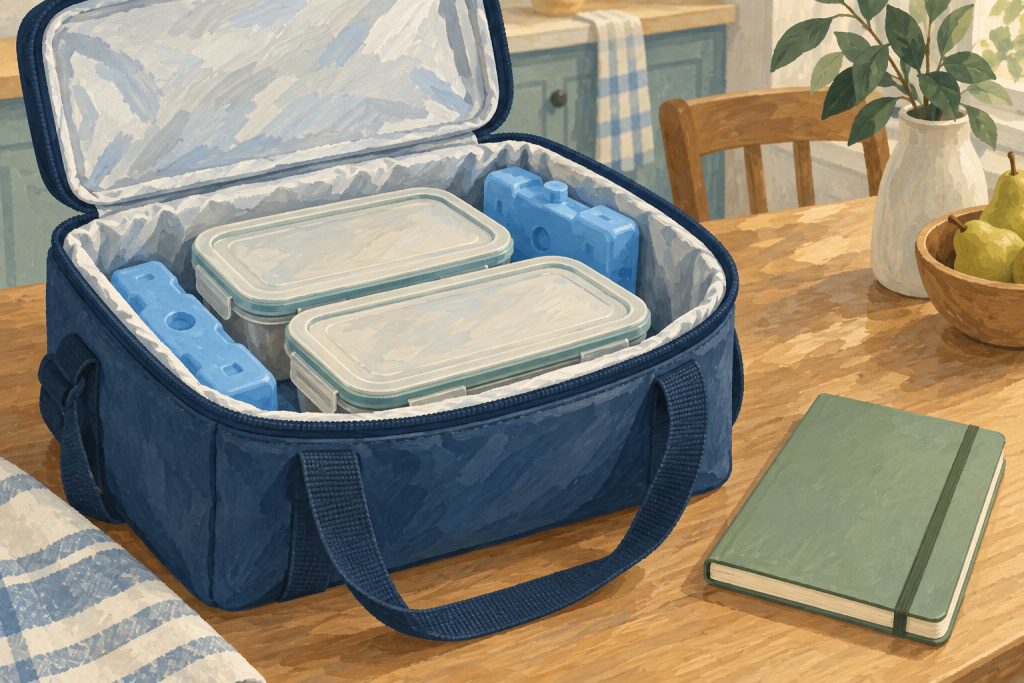
A restaurant box can spend longer out of refrigeration than expected when the trip home includes errands or a ferry wait. Before taking perishable leftovers, think through the whole journey—not just the drive from the restaurant to the terminal.
Use a time-and-temperature plan
USDA guidance says perishable leftovers should be refrigerated within two hours, or within one hour when the temperature is above 90°F. Keep refrigerated food at 40°F or below. A bag that feels cool is not evidence that food has stayed at a safe temperature.
If you expect a delay, plan suitable cold storage rather than hoping the schedule works out. An insulated bag without an effective cooling source is not a promise of safe refrigeration. If you cannot keep the food safely, do not make the rest of the outing depend on carrying it.
Finish the job when you arrive
USDA recommends shallow containers for leftovers and generally using refrigerated leftovers within three to four days or freezing them. Its hot-food guidance also explains that food can go into the refrigerator; leaving a large hot portion on the counter until it fully cools is not the required routine.
Make the plan easy to follow
- Know when the food left temperature control.
- Bring the appropriate cooler setup if needed.
- Prioritize getting perishables home over an extra errand.
- Label stored leftovers so their timing is clear.
Follow any more specific food-handling instructions that apply. When the time or temperature history is uncertain, do not use appearance or smell alone as proof of safety. A smaller take-home portion with a clear storage plan is more useful than a large box you cannot handle safely.
AI-generated editorial illustration; not proof that a particular cooler maintains a safe food temperature.