
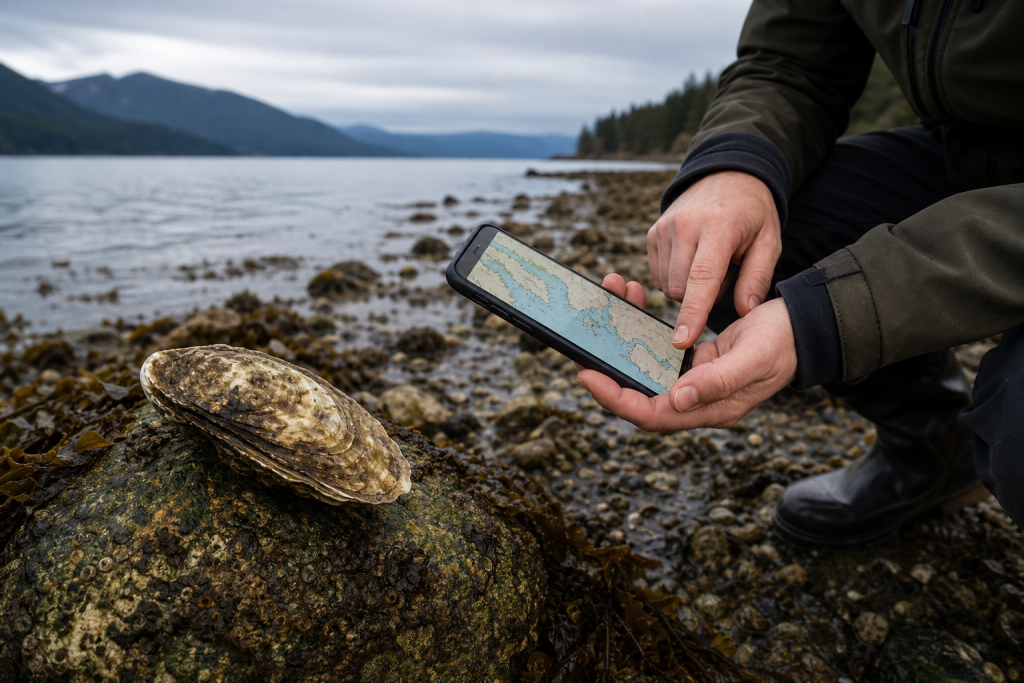
Answer first: Do not recreationally harvest Hood Canal oysters, clams, mussels, scallops, geoduck, or other molluscan shellfish unless two separate gates are open: the Washington State Department of Health says the location and species are safe, and the Washington Department of Fish and Wildlife says the beach and season are legally open. If either gate is closed, do not harvest.
As checked on August 25, 2026, a WDFW emergency rule closing clam, mussel, and oyster harvest on all public beaches in Marine Area 12, which covers Hood Canal south of the Hood Canal Bridge, remained in effect through August 31 unless changed sooner. WDFW’s shellfish page also continued to display the Hood Canal biotoxin warning. Conditions and emergency rules can change, so this is a dated evidence check—not permission to harvest on a later day.
Shellfish offered by a regulated commercial seller are handled under a different system. Washington DOH licenses commercial shellfish operations, approves harvest sites, monitors hazards and closes commercial growing areas when necessary. A recreational beach closure therefore should not be treated as proof that every oyster in a Kitsap seafood case or restaurant is unsafe. It does mean buyers should use an established seller and ask for traceability rather than buying untagged shellfish from an informal source.
The two-gate check for recreational harvesting
Washington divides responsibility between two agencies. DOH evaluates public-health conditions, including marine biotoxins and pollution. WDFW controls recreational seasons, emergency rules, species limits and other harvest requirements. WDFW summarizes the decision clearly: a recreational harvest is safe and legal only when both agencies show an open status.
Gate 1: Check DOH health status
Open the Washington Shellfish Safety Map on the day you intend to harvest. Search or zoom to the exact beach rather than relying on a general reference to “Hood Canal.” Click the beach and surrounding closure zone, then check:
- whether a marine biotoxin closure covers the location;
- whether the closure applies to the species you want;
- whether pollution has closed or restricted the beach; and
- whether a summer Vibrio precaution or other advisory is displayed.
The map warns that not every beach is mapped. DOH also provides a recorded Shellfish Safety Hotline at 1-800-562-5632. If the map is unclear, the location is unmapped or you cannot confidently identify the closure boundary, do not harvest until you receive clarification from DOH or the appropriate local health agency.
Gate 2: Check WDFW season and emergency rules
Next, use WDFW’s clam, mussel and oyster beach finder to locate the named public beach. Review its season, access information and special rules. Then check the emergency fishing and shellfishing rules, which can override an annual season guide.
A beach can have a normally open annual season and still be closed by a current health-related emergency rule. For example, WDFW’s DNR-46 Hood Canal page showed a year-round underlying season while simultaneously displaying the 2026 biotoxin closure. The emergency closure controls.
Why cooking is not a workaround
The June 12 Hood Canal closure followed reports of dangerous paralytic shellfish poisoning toxin levels. WDFW states that these biotoxins cannot be destroyed by cooking, freezing or cleaning. Laboratory testing is required because contaminated shellfish cannot reliably be identified by appearance. Do not collect closed shellfish with a plan to cook them thoroughly later.
The June notice and related WDFW warning concerned molluscan shellfish, including clams, oysters, mussels and scallops. Crab and shrimp were not included in that particular biotoxin closure, but they have their own WDFW seasons, areas and rules. “Not included in this notice” is not the same as “open everywhere,” so check the current crab or shrimp page before setting gear.
Buying shellfish is a different decision
Recreational rules govern what an individual may gather. Commercial shellfish move through a regulated harvest and distribution system. DOH says commercial harvest sites must be approved, and commercial operations are subject to licensing, sanitation, temperature-control and recordkeeping requirements. DOH also monitors commercial growing areas for biotoxins and other hazards and can close them to harvest.
Containers of shellstock must carry traceability information, including the certified operation, harvest date, harvest location and shellfish type. Dealers and food businesses retain tags so a lot can be traced if a closure, recall or illness investigation occurs.
When buying oysters, clams or mussels from a market, seafood counter or direct seller, use this practical checklist:
- Buy from an established commercial seller. Avoid untagged shellfish offered through an informal sale.
- Ask what the shellfish are and where they were harvested. “Hood Canal oysters” is not a precise harvest location.
- Ask whether shellstock tags are available. A retailer or restaurant may keep the original tag rather than hand it to you, but staff should be able to identify the product’s source.
- Keep shellfish cold. Purchase them near the end of your trip and refrigerate them promptly.
- Do not assume current inventory. Species and harvest locations may change in response to closures, seasons and supply.
Suquamish Seafoods’ website identifies a retail store near Agate Pass and describes oysters, clams, geoduck and crab among its product lines. However, its website does not provide reliable same-day inventory. Call the store or another seller before traveling, and ask what is actually available and where it was harvested. This mention is editorial and is not a paid placement or endorsement.
A 60-second check before leaving home
- Name the exact beach and species you plan to harvest.
- Check that beach and species on the DOH safety map.
- Check the WDFW beach page and emergency-rule search.
- Proceed only if both agencies show an open status.
- Review the current license, limit, size, access and handling rules.
- Recheck if plans change to another beach or species.
For a purchase, replace those steps with three questions: Is this a regulated commercial seller? Can the shellfish be traced to a harvest date and area? Has the seller confirmed today’s inventory?



Leave a Reply